Featured Specialist: Dr. John Mizukawa
An oral pathology biopsy is a short, minor procedure where a small tissue sample is removed from an unusual sore, lesion, or growth in the mouth and sent to a lab for analysis. It’s typically done with local anesthesia, takes only a few minutes, and is recommended whenever a lesion’s appearance or behavior can’t be explained through a routine exam alone. Unexplained oral lesions can be concerning and can have significant long-term consequences if left undiagnosed and untreated, which is exactly why a biopsy exists as a definitive way to find out what’s going on.
What Does Oral Pathology Cover, and When Is a Biopsy Recommended?
Oral pathology is the branch of care focused on diagnosing and treating unusual lesions, sores, or tissue changes in the mouth, jaw, and surrounding structures. Many oral lesions turn out to be harmless, related to minor trauma or irritation, but some require a closer look because their cause isn’t obvious from a visual exam alone. A biopsy is generally recommended when a lesion persists beyond what would be expected for a normal healing process, looks unusual in color or texture, or simply can’t be explained by any obvious cause. Our oral pathology team evaluates each case individually, since the right next step depends heavily on what the lesion looks like and how it’s behaving.
Dr. John Mizukawa brings a particular depth of training to this area of care. During his oral and maxillofacial surgery residency at Vanderbilt University Medical Center, he received extensive training in the management of benign pathology, and he graduated from the University of Southern California at the top of his class, where he received the American Association of Oral and Maxillofacial Pathologists (AAOMP) award for the top senior in oral pathology.
What Are Common Reasons a Sore or Lesion Gets Evaluated?
Most of the time, a biopsy is recommended after your dentist or our team notices something during an exam that warrants a closer look, though patients sometimes notice something themselves first. Common reasons a lesion gets flagged for evaluation include:
- A sore that doesn’t heal. Most minor irritations in the mouth heal within one to two weeks. A sore that lingers well beyond that timeframe is worth having evaluated.
- An unusual color or texture change. White, red, or discolored patches, or areas that feel rough, thickened, or different from the surrounding tissue, are worth a professional look.
- A persistent lump or growth. A bump that doesn’t go away, or that seems to be growing or changing, should be assessed by a specialist.
- Numbness or a change in sensation. Unexplained numbness in an area of the mouth or lip can sometimes be associated with an underlying issue worth investigating.
None of these signs automatically mean something serious is going on, and self-diagnosis isn’t the goal here — professional evaluation is what actually answers the question. If you’re not sure what to look for at home in the first place, our guide on oral cancer self-screening walks through what to watch for between checkups.
What Happens During the Biopsy Appointment?
A biopsy appointment is generally quick and far less involved than most patients expect. Here’s what the visit typically looks like from start to finish.
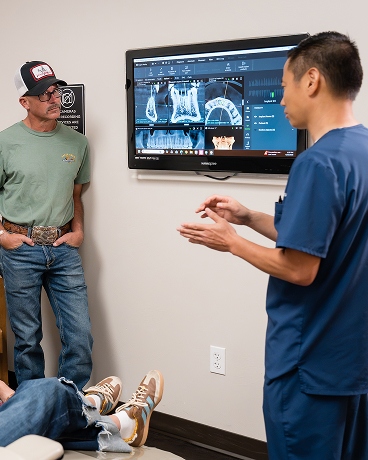
- Examination and discussion. Your surgeon will examine the area, review your history, and explain why a biopsy is being recommended and what type will be used. If the lesion’s depth or its relationship to nearby bone or structures needs a closer look, our in-house cone beam CT (CBCT) 3D imaging can help with diagnosis and planning before the procedure.
- Local anesthesia. The area around the lesion is numbed with local anesthesia, so the procedure itself is not painful.
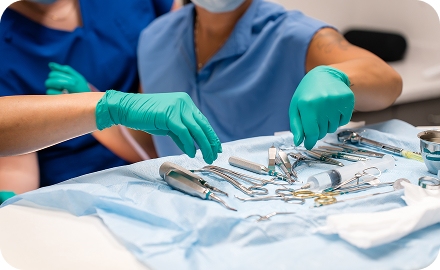
- Tissue sample removal. A small sample of the tissue — sometimes the entire lesion if it’s small — is carefully removed. Depending on the case, this may be done with a scalpel or other precise surgical instrument.
- Closing the site. If needed, a small stitch or two may be placed to help the area heal.
- Sample preparation. The tissue sample is placed in a preservative solution and labeled for transport to a pathology lab.
- Post-procedure instructions. You’ll receive simple aftercare instructions before heading home, since most biopsies don’t require sedation beyond local anesthesia.
Incisional vs. excisional biopsies: what’s the difference?
Your surgeon will choose between two general approaches depending on the size and characteristics of the lesion. An incisional biopsy removes only a small portion of a larger lesion, which is often the preferred approach when the goal is purely diagnostic and the lesion is too large to remove entirely in one visit. An excisional biopsy removes the entire lesion along with a small margin of surrounding healthy tissue, which can serve both a diagnostic and treatment purpose at the same time when the lesion is small enough. Your surgeon will recommend the approach that makes the most sense for your specific situation.
What Happens to the Sample, and How Long Do Results Take?
Once your tissue sample is removed, it’s sent to a specialized lab where a pathologist examines it under a microscope to identify exactly what type of cells and tissue changes are present. This analysis is what provides a definitive diagnosis, rather than relying on visual appearance alone.
Turnaround time can vary depending on the lab and the complexity of the case, so your surgeon will let you know the expected timeframe for your specific results, which is often within about one to two weeks. Our team will follow up with you directly once results are back rather than leaving you to wonder or track it down yourself.
What Happens Next, Depending on the Results?
What happens after your results come in depends entirely on what the lab finds.
If the results are benign
The majority of biopsies come back showing benign, non-cancerous findings. In these cases, your surgeon will explain the specific diagnosis, let you know whether any further treatment or monitoring is needed, and answer any questions you have about what caused the lesion in the first place.
If further evaluation or treatment is needed
If the results indicate something that requires additional treatment, your surgeon will walk you through the next steps and coordinate care accordingly. Because Southwest Oral Surgical Arts is the only practice in Southern Utah offering both oral and maxillofacial surgery and periodontics under one roof, many next steps can be coordinated without sending you out for extra referrals or appointments. For cases requiring a higher level of care, our credentialing at St. George Regional Hospital and access to Coral Desert Surgical Center allow for a smooth transition to the appropriate setting.
What Does Recovery Look Like After a Simple Biopsy?
Recovery from a simple oral biopsy is typically minor and short-lived, similar to recovering from any small oral procedure. Here’s what to generally expect:
- Mild soreness. Some tenderness at the biopsy site is normal for a few days and usually responds well to over-the-counter pain relief as recommended by your surgeon.
- Minimal swelling. Slight swelling can occur but is usually mild and resolves quickly.
- Simple aftercare. You’ll likely be advised to eat soft foods, avoid irritating the area, and keep it clean while it heals.
- Quick healing. Most biopsy sites heal within a week to ten days, especially when aftercare instructions are followed closely.
If you or your dentist have noticed a sore, lump, or lesion in your mouth that doesn’t seem to be resolving on its own, getting it evaluated promptly is the best way to get clear answers and peace of mind. We invite you to schedule a consultation with our team so we can take a look and walk you through next steps together.
Frequently Asked Questions
Does needing a biopsy mean I have cancer?
No. Most oral lesions that get biopsied turn out to be benign. A biopsy is simply the most reliable way to find out exactly what a lesion is, so your surgeon can give you a clear and accurate answer rather than a guess.
Is an oral biopsy painful?
The area is numbed with local anesthesia before the procedure, so patients typically feel pressure rather than pain during the biopsy itself. Mild soreness afterward is normal and generally manageable with basic aftercare.
How soon will I get my biopsy results?
Turnaround time depends on the lab and the nature of the case, but results are often available within about one to two weeks. Your surgeon will give you a more specific expected timeframe and will follow up with you once results are in.
Should I be worried about a mouth sore that hasn’t healed?
A sore that lingers beyond one to two weeks, or that changes in appearance, is worth having evaluated by a professional rather than watched indefinitely on your own. Most causes are minor, but a proper evaluation is the only way to know for certain.
How long does the biopsy procedure itself take?
A simple biopsy is typically a brief, in-office procedure that takes only a matter of minutes once the area is numbed, though your total appointment time will include examination and preparation as well.
Will I need stitches after a biopsy?
Depending on the size and location of the tissue sample, a small stitch or two may be placed to support healing. Your surgeon will let you know what to expect for your specific procedure.
Can my regular dentist perform an oral biopsy, or do I need a specialist?
Many general dentists refer patients to an oral surgeon for a biopsy, particularly when the lesion is in a more complex location or when a definitive diagnosis is needed. Oral and maxillofacial surgeons have specialized surgical training and, in Dr. John Mizukawa’s case, additional focused training in oral pathology, which makes evaluating and biopsying unusual lesions a core part of the practice.