

Featured Specialist: Dr. Matthew K. Mizukawa
An oral and maxillofacial surgeon treats the full range of injuries that can result from an accident to the face, including fractured jaws, knocked-out or broken teeth, facial lacerations and soft tissue damage, and, in more severe cases, injuries involving the cheekbones or eye sockets. These injuries are almost always treated in coordination with a hospital emergency department, since serious facial trauma often accompanies other injuries that need to be ruled out or treated first. Once you’re stable, an oral surgeon steps in to evaluate, repair, and reconstruct the hard and soft tissue damage to your mouth, jaw, and face.
What Types of Facial Trauma Does an Oral Surgeon Treat?
Accidents involving the face can range from a single chipped tooth to complex, multi-system injuries. Oral and maxillofacial surgeons are trained specifically to manage trauma to the mouth, jaw, and facial skeleton, which includes:
- Jaw fractures: Breaks in the upper jaw (maxilla) or lower jaw (mandible), which can range from a small hairline fracture to a complex break affecting the bite and jaw function.
- Knocked-out or broken teeth: Teeth that have been fractured, loosened, or completely avulsed (knocked out) from their socket during a fall, collision, or impact.
- Facial lacerations and soft tissue injury: Cuts, tears, or trauma to the lips, gums, cheeks, and surrounding soft tissue that often accompany a jaw or dental injury.
- Cheekbone and eye socket involvement: In more severe accidents, fractures can extend into the cheekbone (zygoma) or the bones surrounding the eye socket (orbit), requiring careful evaluation and often coordinated care with other specialists.
Because these injuries often overlap, a thorough evaluation is essential to identify everything that needs treatment, not just the most visible injury. A patient who comes in with a broken tooth, for example, may also have a hairline jaw fracture or soft tissue injury that isn’t obvious without a careful exam and imaging, which is why a comprehensive evaluation matters even when one injury seems more urgent than the others.
What Determines Whether a Facial Injury Needs Surgery Right Away?
Not every facial injury requires immediate surgery, but several factors influence how quickly treatment needs to happen:
- Airway and breathing concerns: Severe swelling or bleeding that could affect breathing takes priority over every other consideration and is addressed in the emergency setting first.
- Displacement of a fracture: A jaw or facial bone that has shifted out of its normal position often needs more prompt surgical correction than a stable, non-displaced fracture.
- Open wounds involving bone: Injuries where a fracture is exposed through broken skin or gum tissue generally need more urgent surgical attention to reduce infection risk.
- A knocked-out tooth that could potentially be saved: Time matters here, since a tooth has the best chance of being successfully re-implanted when treatment happens quickly.
Your surgical team, often working alongside emergency medicine physicians, will determine the right sequence and timing of treatment based on your overall medical stability and the specific nature of your injury.
What Should You Do Immediately After an Accident Involving Your Mouth, Jaw, or Face?
What you do in the first few minutes after an accident can make a real difference in how well an injury heals. As a general guide:
- Seek emergency care immediately for any suspected jaw fracture, heavy or uncontrolled bleeding, loss of consciousness, difficulty breathing, or if you’re unsure how serious the injury is. When in doubt, go to the emergency room or call 911.
- Control bleeding with gentle, direct pressure using clean gauze or a cloth while you wait for care, avoiding excessive force near the eyes or areas of suspected fracture.
- Preserve any knocked-out teeth by handling them only by the crown (not the root) and keeping them moist, such as in milk or the patient’s own saliva, until you can be seen.
- Avoid moving or manipulating a jaw that feels out of alignment, and support it gently if needed, such as with a hand or cloth, until you’re evaluated.
- Get to an emergency room or trauma center promptly so that any life-threatening injuries can be ruled out first, before more detailed dental or facial treatment planning begins.
This is general first-aid guidance, not a substitute for emergency medical evaluation. Any significant facial trauma should be assessed by medical professionals right away.
How Does SWOSA’s Hospital Connection Help You After an Accident?
Southwest Oral Surgical Arts is credentialed at St. George Regional Hospital (SGRH), where we provide oral surgery ER call coverage and facial trauma care for the hospital’s trauma center. In practice, this means that if you arrive at SGRH’s emergency department with a facial injury, an oral and maxillofacial surgeon from our team may be called in as part of your care, working alongside the emergency medicine physicians who are already treating you.
Dr. Matthew Mizukawa has been an integral part of treating some of the most complex facial trauma cases seen at SGRH, including injuries from severe automobile accidents and gunshot wounds to the face. That level of hospital-based trauma experience means that when a serious facial injury comes through the emergency department, the surgeon evaluating it has direct, ongoing experience managing exactly this kind of case, not just routine dental and jaw procedures. For patients with more complex reconstructive needs, our team also has access to Coral Desert Surgical Center to manage advanced cases outside the emergency setting.
Facial trauma cases often require anesthesia to manage pain and allow for careful surgical repair, particularly for more involved fracture repair or reconstruction. Our surgical assistants are DAANCE certified, meaning they’ve met the Dental Anesthesia Assistant National Certification Exam standard, the national benchmark for anesthesia assistant training. That matters for trauma patients specifically, since accurate anesthesia support is an essential part of safely treating complex facial injuries, whether in a hospital operating room or at Coral Desert Surgical Center.
What Does the Evaluation Process Involve?
Once you’re medically stable, evaluating a facial injury involves a careful, systematic look at both the hard and soft tissue involved. This typically includes:
- A thorough clinical exam: Checking your bite, jaw movement, facial symmetry, and areas of numbness or tenderness that can point to nerve involvement or fracture.
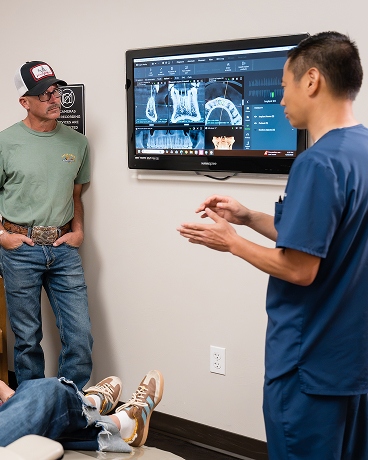
- Advanced imaging: Our in-house cone beam CT (CBCT) 3D imaging allows your surgeon to see the exact location and extent of any fracture, which is critical for planning treatment accurately. Hospital-based imaging such as CT scans may also be used, especially in the emergency setting.
- Dental assessment: Evaluating any teeth that were loosened, fractured, or lost, and determining whether they can be saved, stabilized, or will need to be replaced later.
- Soft tissue assessment: Examining lacerations and soft tissue injuries to determine what needs to be cleaned, repaired, or closed, often in the same visit as fracture treatment.
This evaluation forms the basis for a treatment plan that addresses everything from the underlying bone injury to the smaller details, like a chipped tooth, that still matter for your long-term function and appearance. Because CBCT imaging is available in our office, follow-up evaluation and treatment planning after your initial emergency visit can often move forward without the delay of scheduling separate outside imaging.
What Are the Treatment Options for Facial Trauma?
Treatment for facial trauma is highly individualized, but it generally follows a logical progression once the full extent of the injury is understood. Facial trauma reconstruction can involve any combination of the following, depending on severity:
- Stabilizing fractures: Broken jaw or facial bones are typically repositioned and stabilized, which may involve plates, screws, or wiring the jaw to allow proper healing and restore a functional bite.
- Reconstructive techniques for severe cases: For more complex facial defects resulting from trauma, reconstruction can involve using the patient’s own bone, such as bone grafted from the hip, or free vascular flaps taken from the leg to rebuild damaged facial structure. Dr. Mizukawa has direct experience with these advanced reconstructive techniques from his work treating complex trauma cases at SGRH.
- Soft tissue repair: Lacerations and other soft tissue injuries are cleaned and repaired to minimize scarring and restore normal appearance and function.
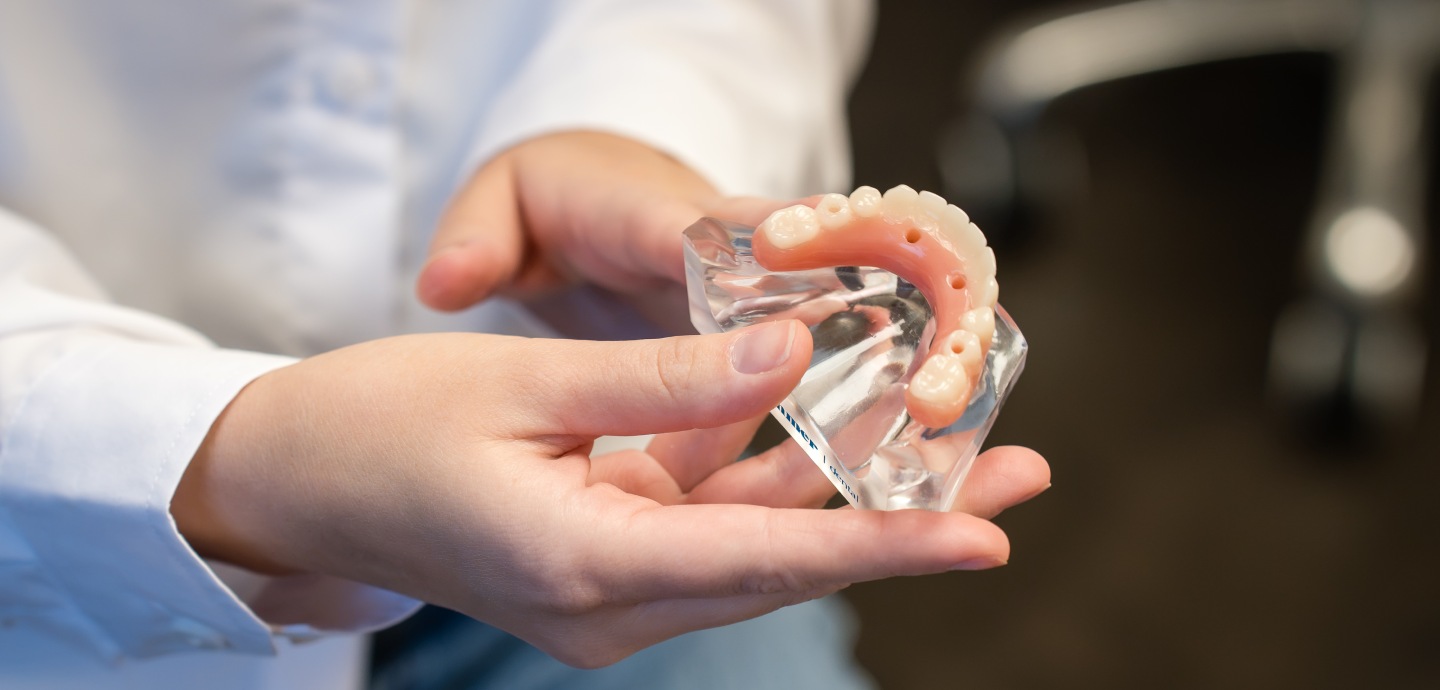
- Restoring lost teeth: Once the jaw and surrounding tissue have healed, teeth that were lost in the accident can often be replaced with dental implants, giving patients a path back to a complete, functional smile.
Because every accident is different, your surgeon will explain which of these steps apply to your specific injury and in what order they need to happen.
How Does Facial Trauma Affect Long-Term Dental Health?
An accident that damages your jaw or teeth doesn’t just require immediate repair; it can also change your long-term dental health if it isn’t addressed thoroughly. A knocked-out or severely damaged tooth leaves a gap that can affect chewing, speech, and the position of neighboring teeth over time if it’s left unaddressed. This is why restoring lost teeth is typically framed as part of the overall trauma treatment plan, not a separate, optional step. Once the jaw and surrounding bone and gum tissue have fully healed, dental implants are often used to replace missing teeth, giving patients a functional, natural-looking result and helping prevent the shifting or bone loss that can follow an untreated gap. Because Southwest Oral Surgical Arts offers both oral and maxillofacial surgery and periodontics under one roof, patients recovering from facial trauma can have their fracture care, tooth extraction, and eventual implant planning coordinated by the same team rather than needing separate referrals.
What Does Recovery and Follow-Up Care Look Like?
Recovery from facial trauma surgery is a gradual process, and your surgeon will give you a specific plan based on your injury. In general, patients can expect:
- An initial healing period with swelling, bruising, and a modified diet, often liquid or soft foods, while the surgical sites begin to heal.
- Close follow-up visits in the days and weeks after surgery to monitor healing, check that fractures are stabilizing properly, and address any concerns.
- A gradual return to normal activities as swelling resolves and jaw function improves, with your surgeon guiding when it’s safe to resume work, exercise, or a regular diet.
- Longer-term monitoring for bone healing, which takes longer than soft tissue recovery, and for planning any future treatment, such as dental implants, once the area has fully healed.
Because facial trauma often involves multiple structures, your recovery may include coordinated follow-up with your oral surgeon and other specialists involved in your initial emergency care.
If you or a loved one has experienced a facial injury from an accident, having a surgical team with real hospital-based trauma experience matters. Our connection to St. George Regional Hospital means we’re already part of the emergency care system in Southern Utah, ready to step in when a jaw, tooth, or facial injury needs specialized surgical attention. For non-emergency evaluation or follow-up care, you can schedule a consultation with our team to discuss your treatment and recovery plan.
Frequently Asked Questions
Is facial trauma surgery an emergency?
It depends on the severity of the injury. Suspected fractures, heavy bleeding, loss of consciousness, or breathing difficulty require immediate emergency care. Some facial trauma surgery happens urgently as part of that initial emergency visit, while other reconstructive or restorative treatment may be scheduled in the days or weeks that follow once you’re stable.
Will insurance cover facial trauma treatment as medical rather than dental?
Many facial trauma injuries, particularly fractures and reconstructive surgery resulting from an accident, are billed to medical insurance rather than dental insurance, since they involve injury and functional restoration rather than routine dental care. Coverage details vary by plan, and our team can help you understand your specific situation.
What if I lose a tooth in an accident?
If a tooth is completely knocked out, try to handle it only by the crown, keep it moist, and seek emergency dental or medical care as quickly as possible, since prompt treatment gives the best chance of saving the tooth. If the tooth can’t be saved, it can often be replaced later with a dental implant once the surrounding tissue has healed.
How soon after an injury should I be seen by an oral surgeon?
For any suspected fracture, significant bleeding, or knocked-out tooth, you should be seen immediately, typically starting in the emergency room. Once you’re medically stable, follow-up with an oral and maxillofacial surgeon should happen as soon as possible to begin definitive treatment planning, since some injuries are easier to treat effectively the sooner they’re addressed.
Can a broken jaw heal without surgery?
Some minor, well-aligned jaw fractures may be managed without surgical hardware, but many jaw fractures require surgical stabilization to heal properly and restore a functional bite. Your surgeon will determine the right approach based on imaging and the specific location and severity of the fracture.
What happens if facial trauma isn’t treated promptly?
Delayed treatment of facial trauma can lead to complications such as improper bone healing, an unstable bite, infection, or more difficult reconstruction later on. This is part of why prompt emergency evaluation and timely follow-up with an oral and maxillofacial surgeon are so important after any significant facial injury.
Will facial trauma leave permanent scarring or changes to my appearance?
It depends on the type and severity of the injury. Many facial lacerations heal with minimal visible scarring when they’re cleaned and closed properly soon after the injury, and fracture repair is generally planned to restore normal facial contour and function as closely as possible. More severe or complex injuries can carry a higher chance of lasting cosmetic change, which is something your surgical team will discuss honestly with you as part of your treatment plan.