

Featured Specialist: Dr. Matthew K. Mizukawa
TMJ disorder affects the joints and muscles that connect your jaw to your skull, and it can cause pain, clicking, and difficulty opening or closing your mouth comfortably. Most people find real relief through conservative, nonsurgical care such as lifestyle changes, night guards, and physical therapy. Lifestyle changes help, but surgical intervention may be required when conservative treatment doesn’t resolve your symptoms or when imaging shows structural damage inside the joint itself.
What Is TMJ Disorder?
Your temporomandibular joints (TMJs) sit just in front of each ear, connecting your lower jaw to your skull. Each joint contains a small cartilage disc that allows smooth, hinge-like movement when you talk, chew, and yawn. TMJ disorder, sometimes called TMD, refers to a group of conditions affecting these joints and the surrounding muscles. It can develop from a combination of factors, including jaw injury, arthritis, chronic teeth grinding or clenching, joint structure, or ongoing muscle tension. For many patients, TMJ disorder is a manageable condition that responds to conservative therapy. For others, especially those with underlying structural problems in the joint, more advanced treatment becomes necessary to restore normal function and relieve pain.
What Are the Common Symptoms of TMJ Disorder?
TMJ disorder can show up differently from one patient to the next, but several symptoms tend to appear together. Recognizing these patterns early can help you get an accurate diagnosis and start the right treatment sooner.
- Jaw pain or soreness: A dull ache or sharp pain in front of the ear, in the jaw muscles, or radiating toward the neck and shoulders, often worse with chewing or talking.
- Clicking or popping sounds: An audible click, pop, or grinding sensation when you open or close your mouth, which may or may not be painful on its own.
- Limited jaw movement: Difficulty opening your mouth wide, a jaw that feels stiff, or a bite that suddenly feels like it doesn’t fit together correctly.
- Headaches: Frequent tension-type headaches or pain around the temples, which often accompany jaw muscle strain.
- Jaw locking: An episode where the jaw temporarily gets stuck in an open or closed position, which can be alarming and is a sign the joint needs evaluation.
If you notice one or more of these symptoms lasting more than a few weeks, it’s worth having your jaw evaluated rather than waiting to see if it resolves on its own.
How Is TMJ Disorder Diagnosed?
Getting an accurate diagnosis is the foundation for choosing the right treatment path, whether that ends up being conservative care or surgery. Diagnosis typically involves a few key steps:
- A detailed history and clinical exam: Your surgeon will ask about when your symptoms started, what makes them better or worse, and any history of jaw injury, grinding, or clenching. They’ll also feel and listen to the joint as you open and close your mouth.
- Bite and range-of-motion assessment: Measuring how far you can comfortably open your mouth and checking whether your upper and lower teeth meet the way they should helps identify how much the joint is affecting daily function.
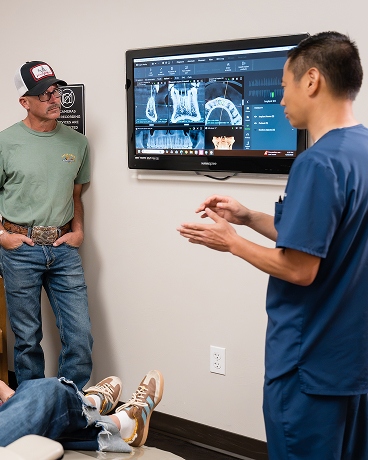
- In-house CBCT 3D imaging: When symptoms suggest a structural problem, cone beam CT imaging allows your surgeon to see the bones of the joint in three dimensions, right in our office, without needing a separate imaging appointment elsewhere.
- Ruling out other causes: Because jaw pain and headaches can stem from other sources, your surgeon will also consider whether dental issues, sinus problems, or other conditions could be contributing to your symptoms.
This combination of history, exam, and imaging gives your surgeon a clear picture of whether your TMJ disorder is primarily muscular, primarily structural, or a combination of both, which directly shapes the treatment recommendation.
What Nonsurgical Treatments Are Tried First for TMJ Disorder?
The vast majority of TMJ cases begin with conservative, reversible treatment. These approaches carry little to no risk and often provide meaningful relief, which is why they’re almost always the starting point before anyone discusses surgery.
- Lifestyle and habit changes: Avoiding hard, chewy, or sticky foods, cutting back on wide yawning or gum chewing, and becoming more aware of habits like teeth clenching or resting your chin on your hand can reduce strain on the joint.
- Night guards: A custom oral appliance worn during sleep can reduce the impact of nighttime grinding and clenching, which places significant stress on the TMJ and surrounding muscles.
- Physical therapy and jaw exercises: Gentle stretching, targeted jaw exercises, and posture correction can improve range of motion and reduce muscle tension over time.
- Anti-inflammatory approaches: Over-the-counter anti-inflammatory medication, warm or cold compresses, and stress management techniques can help calm an acute flare-up while other treatments take effect.
Many patients see steady improvement after several weeks to a few months of consistent conservative care. Your surgeon or dentist will typically ask you to give these approaches a genuine trial period before considering anything more invasive.
What Are the Signs Conservative Treatment Isn’t Working?
Conservative therapy fails to help everyone, and that’s not a reflection of doing it wrong — for some patients, the underlying problem is structural and simply can’t be resolved with lifestyle changes or a night guard alone. Signs it may be time to talk with an oral surgeon about further options include:
- Persistent pain despite consistent treatment: You’ve followed conservative recommendations for a reasonable period of time and your pain hasn’t meaningfully improved.
- Worsening jaw function: Your jaw is locking more frequently, your bite feels increasingly unstable, or your range of motion continues to decrease.
- Imaging shows structural joint damage: A CT scan or MRI reveals disc displacement, joint degeneration, or bone changes that explain why conservative care isn’t enough.
- Symptoms interfering with daily life: You’re struggling to eat, speak, or sleep comfortably because of ongoing jaw pain or dysfunction.
These signs don’t automatically mean you need surgery, but they are a strong indication that it’s time for a more thorough evaluation, often including in-house cone beam CT (CBCT) 3D imaging, to understand exactly what’s happening inside the joint.
Surgery vs. Nonsurgical Treatment: How Do You Decide?
Choosing between continued conservative care and surgical treatment depends on your specific symptoms, how long you’ve been treated, and what your imaging shows. The table below outlines how the two approaches generally compare.
| Factor | Nonsurgical Treatment | TMJ Surgery |
|---|---|---|
| Best for | Mild to moderate symptoms, muscle-related tension, early-stage disorder | Structural joint damage or cases unresponsive to conservative care |
| Invasiveness | Non-invasive or minimally invasive | Surgical, ranging from minimally invasive to open joint procedures |
| Typical timeline | Weeks to months of ongoing management | A defined procedure followed by a structured recovery period |
| Reversibility | Fully reversible | Permanent joint changes; considered once conservative options are exhausted |
| Diagnosis tools used | Clinical exam, symptom tracking | Clinical exam plus advanced imaging such as CBCT 3D imaging |
Your surgeon will walk through this decision with you, weighing how your symptoms have responded to treatment so far against what your imaging and exam reveal about the health of the joint.
What Are the Surgical Options for TMJ Disorder?
When conservative treatment isn’t enough, TMJ surgery may be recommended to address the underlying structural problem directly. The right surgical approach depends on what’s actually causing your symptoms, and your surgeon will determine this through a careful evaluation that often includes in-house CBCT imaging to see the joint in three dimensions. In general, TMJ surgical options range from less invasive procedures aimed at repositioning or cleaning out the joint space, to more involved procedures for patients with significant joint damage or degeneration. Your oral and maxillofacial surgeon will explain which category of treatment applies to your case and why, so you understand the reasoning behind the recommendation rather than just the procedure itself.
Because every jaw is different, your surgeon’s recommendation will be based on what your specific imaging and exam findings show, not a one-size-fits-all approach. Some patients benefit most from a procedure focused on the joint space and disc position, while others with more advanced joint degeneration need a more comprehensive surgical solution. Part of the value of a thorough diagnostic workup, including CBCT imaging, is that it allows your surgeon to match the treatment to the actual problem rather than guessing based on symptoms alone.
Benefits of Treating TMJ Disorder Properly
Whether your path involves conservative care or surgery, treating TMJ disorder appropriately — rather than living with untreated symptoms — offers real benefits.
Will treating TMJ disorder reduce my pain?
- Reduced daily pain: Addressing the root cause of your TMJ disorder, rather than just managing flare-ups, can significantly reduce chronic jaw and facial pain.
- Fewer headaches: Because jaw muscle tension is a common headache trigger, effective TMJ treatment often reduces headache frequency as well.
Will my jaw function improve?
- Improved range of motion: Proper treatment can restore your ability to open your mouth fully and comfortably for eating and speaking.
- More stable bite: When the joint itself is repaired or realigned, your bite tends to feel more consistent and predictable.
What does this mean for my overall quality of life?
- Better sleep: Reduced nighttime clenching and jaw discomfort often lead to more restful sleep.
- Confidence in everyday activities: When jaw pain and locking episodes are resolved, patients often feel more comfortable eating out, speaking publicly, or simply going about daily life without worrying about their jaw. That kind of relief supports a healthy, confident, beautiful smile in the fullest sense.
What Does Recovery From TMJ Surgery Generally Look Like?
Recovery timelines vary depending on the specific procedure performed, but most patients can expect a staged healing process along these general lines:
- The first few days: Expect swelling, jaw soreness, and a soft or liquid diet while the surgical site begins to heal. Your surgeon will provide specific guidance on pain management and activity restrictions.
- The first one to two weeks: Swelling gradually decreases, and most patients transition to a more varied soft diet as comfort allows. A follow-up visit is typically scheduled to check healing progress.
- The following weeks: Jaw function continues to improve, and many patients begin gentle jaw exercises or physical therapy as directed to rebuild range of motion.
- Longer-term healing: Full recovery and adaptation of the joint can take longer, and your surgeon will schedule follow-up appointments to monitor your progress and confirm the joint is healing as expected.
Every patient’s recovery is a little different, which is why your surgical team will tailor follow-up care and activity recommendations to your specific procedure and healing pace.
If you’ve been dealing with jaw pain, clicking, or limited movement that hasn’t improved with home care, the team at Southwest Oral Surgical Arts can help you understand exactly what’s going on and what your options are. As the only practice in Southern Utah offering both oral and maxillofacial surgery and periodontics under one roof, we’re able to coordinate your care without unnecessary referrals or extra appointments. Reach out today to schedule a consultation and get a clear, personalized plan for relieving your TMJ symptoms.
Frequently Asked Questions
Is TMJ surgery a last resort?
Generally, yes. Most oral surgeons, including our team, recommend a genuine trial of conservative treatments like night guards, physical therapy, and lifestyle changes before considering surgery. Surgery is typically reserved for cases where conservative care hasn’t resolved symptoms or where imaging reveals structural joint damage that needs to be addressed directly.
How do I know if I have TMJ disorder?
Common signs include jaw pain, clicking or popping when you open your mouth, limited jaw movement, frequent headaches, and episodes of jaw locking. If you’re experiencing these symptoms, an evaluation with an oral surgeon or dentist, which may include CBCT imaging, can confirm whether TMJ disorder is the cause.
Can TMJ disorder go away on its own?
For some people, mild TMJ symptoms improve with time and simple lifestyle adjustments, especially if they’re related to temporary muscle tension or stress. However, if symptoms persist, worsen, or involve locking or significant pain, it’s important to seek an evaluation rather than assuming it will resolve without treatment.
Does insurance cover TMJ treatment?
Coverage for TMJ treatment varies widely by insurance plan and depends on whether the treatment is classified as medical or dental in nature. Our team can help you understand your specific coverage and discuss financing options during your consultation.
What causes TMJ disorder?
TMJ disorder can result from several factors, including jaw injury, chronic teeth grinding or clenching, arthritis affecting the joint, or the natural structure and alignment of the jaw. Often it develops from a combination of these factors rather than a single cause, which is why a thorough evaluation is important before starting treatment.
How long does it take to know if nonsurgical TMJ treatment is working?
Most surgeons recommend giving conservative treatments like night guards and physical therapy a genuine trial period of several weeks to a few months before deciding whether they’re effective. Improvement is often gradual, so short-term patience combined with consistent use of the recommended treatment is important before concluding that a different approach is needed.
What is the difference between TMJ and TMD?
TMJ refers to the temporomandibular joint itself, the joint connecting your jaw to your skull, while TMD (temporomandibular disorder) refers to the condition or dysfunction affecting that joint and the surrounding muscles. In everyday conversation, people often use “TMJ” to refer to the disorder as well, but technically TMD is the more precise term for the condition.