

Featured Specialist: Dr. Jamison Metcalf
All-on-4 dental implants replace a full arch of missing or failing teeth using just four strategically placed implants topped with a fixed prosthesis, often on the same day as surgery. The process moves through a 3D-imaged consultation, a single surgical visit, a healing period of several months, and a final permanent restoration. Most patients leave surgery with a temporary set of fixed teeth already in place, so you are rarely without teeth during treatment. Understanding each stage in advance helps you plan for recovery, work, and finances with far less guesswork.
What Is All-on-4, and How Is It Different From Individual Dental Implants?
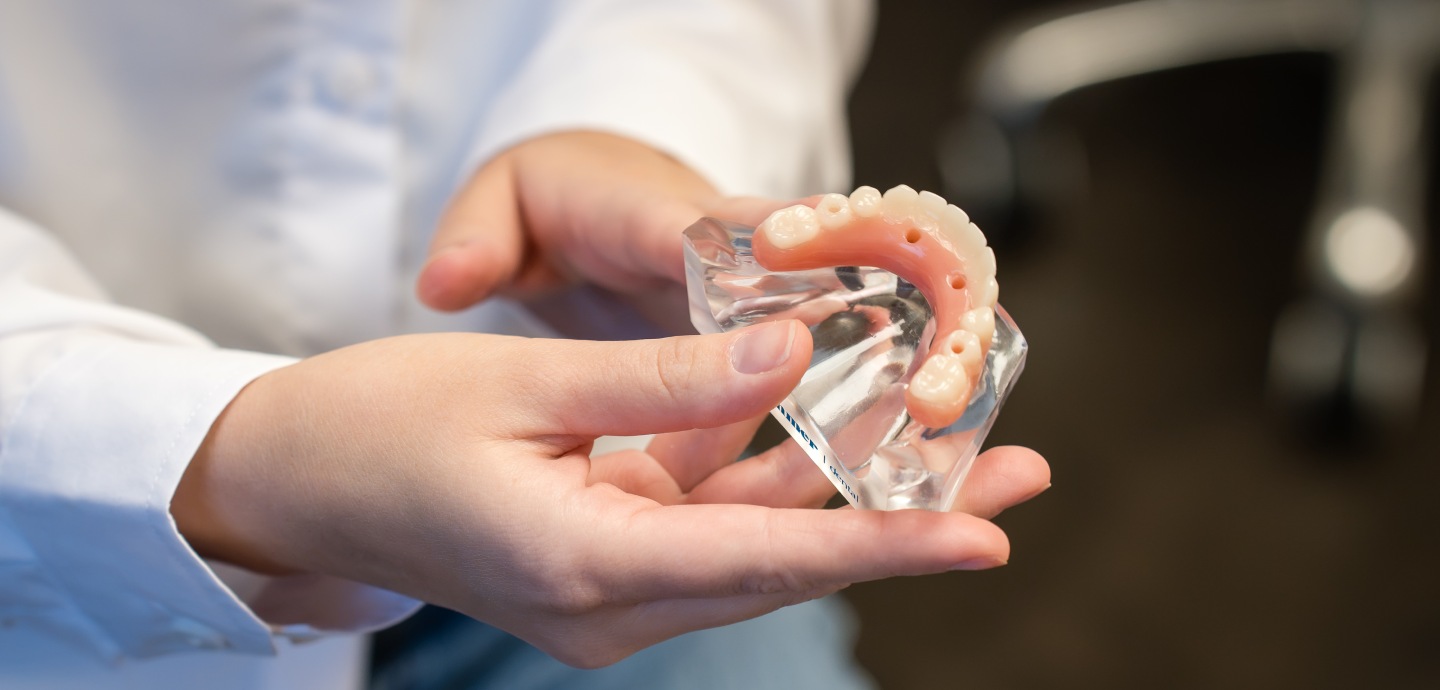
All-on-4 is a full-arch tooth replacement technique that anchors an entire row of upper or lower teeth to just four dental implants, rather than replacing each tooth one at a time. The implants are angled and positioned to make the most of the bone that is already there, and a fixed prosthetic arch is attached to them.
Traditional implant-supported dentures or individual implants typically require six or more implants per arch, and each missing tooth may need its own implant and healing period. All-on-4 was designed specifically for patients who need to replace most or all of the teeth in an arch, consolidating what used to be a longer, more piecemeal process into a coordinated surgical plan. The result is a fixed (non-removable) full arch of teeth that functions much like natural teeth, supported by a smaller number of implants strategically placed for strength.
Who Is a Good Candidate for All-on-4 Dental Implants?
All-on-4 is generally a good option for patients who are missing most or all of their teeth in an arch, are dealing with failing teeth that need to come out, or are unhappy with loose, uncomfortable dentures. Because the four implants are placed at specific angles to engage the denser bone that is typically still available toward the front and sides of the jaw, many patients who have experienced some bone loss over the years can still qualify without needing extensive bone grafting first. This is one of the main reasons All-on-4 has become such a popular option for patients who were told in the past that they did not have enough bone for traditional implants.
That said, candidacy always depends on an individual evaluation. Your surgeon will look at your overall health, the amount and quality of remaining bone, your gum health, and any medical conditions (such as uncontrolled diabetes or certain bone-affecting conditions) that could affect healing. Smoking, certain medications, and unmanaged periodontal disease can also factor into the discussion. At SWOSA, this evaluation is done in person with 3D imaging, so you get a clear, individualized answer rather than a generic estimate.
Dr. Jamison Metcalf, who joined the practice’s periodontal and oral surgery team in 2020 and previously worked at ClearChoice Dental Implant Centers, has placed thousands of dental implants and performed thousands of All-on-4 surgeries over his career, including complex revision cases that require advanced pterygoid and zygomatic implant placement. That depth of experience matters most in exactly the situations where bone loss or a failed prior implant complicates the picture.
What Happens During the All-on-4 Process, Step by Step?
While every treatment plan is customized, the All-on-4 journey generally follows the same sequence:
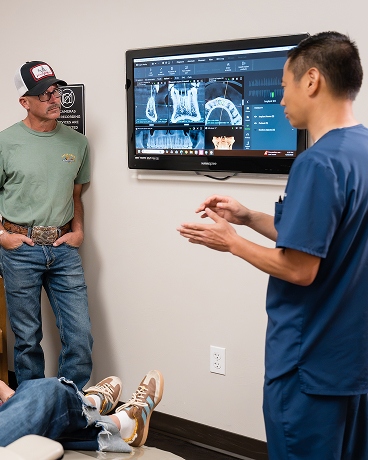
- Consultation and 3D CBCT imaging. Your first visit includes a clinical exam and a cone beam CT (CBCT) scan, which gives your surgeon a detailed 3D view of your jawbone, sinuses, and nerve pathways. Because SWOSA has in-house CBCT imaging, this scan happens right at your appointment rather than requiring a referral elsewhere.
- Treatment planning. Using the CBCT data, your surgeon maps out the exact position and angle for each of the four implants, plans for any teeth that need to be removed, and coordinates the design of your temporary prosthesis. This is also when you will discuss anesthesia options, timeline, and cost.
- Surgery day: extractions, if needed. If you still have failing or diseased teeth in the arch being treated, they are typically removed during the same surgical visit.
- Surgery day: implant placement. The four titanium implants are placed into the jawbone at the pre-planned positions and angles.
- Surgery day: temporary fixed teeth. A temporary but fully fixed set of teeth is attached to the implants before you leave, so you walk out with a functional new smile rather than a gap or a removable temporary.
- Healing period. Over the following months, the implants fuse to the surrounding bone in a process called osseointegration. You will typically be asked to favor softer foods during this stage to protect the implants while they stabilize.
- Final permanent prosthesis. Once healing is complete and your surgeon confirms the implants have integrated well, the temporary teeth are replaced with your final, custom-fitted permanent prosthesis.
Throughout the process, your care team also includes DAANCE-certified surgical assistants, a national anesthesia-assistant credential that reflects specialized training in monitoring patients under sedation during procedures like this one.
What Anesthesia and Sedation Options Are Used on Surgery Day?
All-on-4 surgery is performed under anesthesia so you are comfortable throughout the procedure. Depending on your health history, anxiety level, and the complexity of your case, your surgeon may recommend local anesthesia with oral or IV sedation, or IV general anesthesia. Because All-on-4 combines extractions, implant placement, and a same-day prosthesis into one longer appointment, most patients choose some form of sedation or general anesthesia rather than local anesthesia alone.
Your surgeon and anesthesia team will review your medical history in detail during the treatment-planning visit and recommend the option that best balances your comfort and safety. Whichever approach is chosen, you will be monitored by trained clinical staff throughout the procedure.
What Is Recovery Like After All-on-4 Surgery?
Recovery from All-on-4 happens in two distinct phases: the initial healing window right after surgery, and the longer process of osseointegration before your final teeth are placed.
- First 1-2 weeks: Expect some swelling, bruising, and soreness, which is typical after any oral surgery involving extractions and implant placement. Most patients manage this with prescribed or over-the-counter pain medication and stick to a soft-food diet. Many people take about a week off work or normal activities, though this varies by individual and by the extent of the surgery.
- Weeks 2-8: Swelling and soreness continue to fade, and you gradually reintroduce a wider range of soft-to-moderate foods as your surgeon advises. Your temporary teeth allow you to eat, speak, and go about daily life while the implants heal underneath.
- Months until final restoration: Osseointegration, the process by which bone fuses to the implant surface, generally takes several months. Your surgeon will monitor your healing at follow-up visits and only move forward with your final, permanent prosthesis once the implants are solidly integrated.
Because you have fixed temporary teeth from day one, the disruption to your daily life during this healing window is far less than what many people picture when they hear “months of recovery.”
What Are the Downsides of All-on-4 Dental Implants?
All-on-4 has real benefits, but it is also a significant undertaking, and an honest practice will walk you through the tradeoffs rather than just the highlights.
- It is a substantial upfront procedure. Between extractions (if needed), implant placement, and fitting a temporary prosthesis, surgery day is a longer, more involved appointment than a single implant or a simple extraction.
- There is an adjustment period. Speech and eating with a new prosthesis can feel different at first, and most patients need a few weeks to fully adapt to their temporary teeth before settling into a comfortable routine.
- Cost is a real consideration. Full-arch implant treatment is a bigger investment than removable dentures, and patients should go into the process with a clear understanding of what is involved financially.
- Long-term maintenance matters. Like natural teeth, an All-on-4 prosthesis and the underlying implants need consistent oral hygiene and regular professional checkups. Skipping maintenance can affect how long your results last.
- Healing takes time. While you are not without teeth, the full process from surgery to final prosthesis unfolds over months, not days, and patience is part of the process.
Your surgeon will walk through how these factors apply to your specific situation during your consultation, so you can weigh them clearly before moving forward.
Benefits of Choosing All-on-4 Dental Implants
Even with the honest considerations above, many patients find that All-on-4 dental implants offer real, lasting advantages over other tooth-replacement options.
How does All-on-4 compare to living with failing teeth or old dentures?
- Fixed, not removable: The prosthesis is anchored to your implants, so there is no daily removal, soaking, or worrying about it shifting while you eat or speak.
- Often avoids extensive bone grafting: The angled implant placement is designed to use existing bone efficiently, which can mean less need for separate grafting procedures compared to traditional implant approaches.
- Same-day temporary teeth: You are not sent home to wait with no teeth at all while implants heal.
- Supports long-term jawbone health: Because implants stimulate the jawbone the way natural tooth roots do, they can help slow the bone loss that often continues under dentures over time.
What does day-to-day life look like after full healing?
- A more natural bite and chewing function: Patients often find they can eat a wider variety of foods with more confidence than they could with removable dentures.
- Simplified daily care: Cleaning a fixed arch involves brushing and using recommended cleaning tools around the prosthesis, rather than the soaking and adhesive routines that come with removable dentures.
- Confidence in everyday moments: Many patients describe feeling more comfortable smiling, speaking, and eating in social settings once they have completed treatment and settled into their new, healthy, confident, beautiful smile.
How Much Do All-on-4 Dental Implants Cost?
All-on-4 cost varies based on factors like how many teeth need extraction, whether any additional grafting is needed, the type of anesthesia used, and the materials chosen for your final prosthesis. Because it replaces an entire arch with a coordinated surgical and restorative plan, it is priced differently than a single implant or a basic denture, and your surgeon can only give you an accurate number after your consultation and imaging are complete.
Financing options are available for patients who want to spread out the investment, and our team can walk you through what is available on our financing page once you have a personalized treatment plan in hand.
If you are missing most or all of your teeth in an arch, or you are tired of dentures that slip and limit what you can eat, the best next step is a conversation with a board-certified oral surgeon who can evaluate your specific bone structure and health history. Our team, including Dr. Metcalf’s extensive full-arch implant experience, can walk you through exactly what your treatment would involve. Schedule a consultation to find out whether All-on-4 is the right path toward a healthy, confident, beautiful smile.
Frequently Asked Questions
Does getting All-on-4 dental implants hurt?
You are under anesthesia or sedation during the surgery itself, so you should not feel pain during the procedure. Afterward, most patients experience swelling and soreness similar to other oral surgeries, which is typically managed well with prescribed or over-the-counter pain medication during the first week or two.
How long does the entire All-on-4 process take?
Surgery day itself is usually completed in a single extended appointment, but the full process from consultation to your final permanent prosthesis spans several months to allow for proper healing and osseointegration. Your surgeon will give you a more specific timeline based on your imaging and treatment plan.
Will I be without teeth at any point during treatment?
No. One of the defining features of All-on-4 is that a fixed temporary set of teeth is placed on the same day as your implant surgery, so you leave your appointment with a functional smile while healing takes place underneath.
How is All-on-4 different from traditional dentures?
Traditional dentures rest on the gums and can shift, slip, or require adhesives, and they do not stop the bone loss that continues after tooth loss. All-on-4 is permanently fixed to implants anchored in the jawbone, which supports a more stable bite and helps preserve bone over time.
Can I get All-on-4 if I have already lost significant bone in my jaw?
Often, yes. The All-on-4 technique was specifically developed to make use of the denser bone that typically remains even after some bone loss, which is why many patients who are not candidates for traditional implants can still qualify. Your surgeon will confirm this with a CBCT scan and clinical exam.
What happens if an All-on-4 implant fails?
While implants are designed for long-term stability, any surgical implant can occasionally fail to integrate or develop complications. If this happens, your surgeon will evaluate the cause and discuss options, which may include revision surgery. This is one of the reasons experience with complex and revision cases, like Dr. Metcalf’s training in pterygoid and zygomatic implant techniques, is valuable when choosing a surgical team.
What is the difference between All-on-4 and All-on-6?
All-on-4 uses four implants per arch, with two placed at an angle to make efficient use of available bone, while All-on-6 uses six implants for additional support. Which approach is right for you depends on your bone volume, bite forces, and overall treatment goals, and your surgeon will recommend the option that best fits your CBCT imaging and clinical exam.
What is the final prosthesis made of?
Final All-on-4 restorations are typically made from durable materials such as zirconia or a reinforced acrylic hybrid, chosen based on your bite, aesthetic goals, and your surgeon’s recommendation. Your treatment-planning team will discuss the options that make sense for your specific case before your final prosthesis is fabricated.